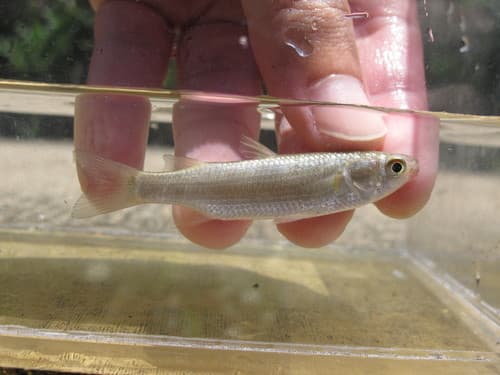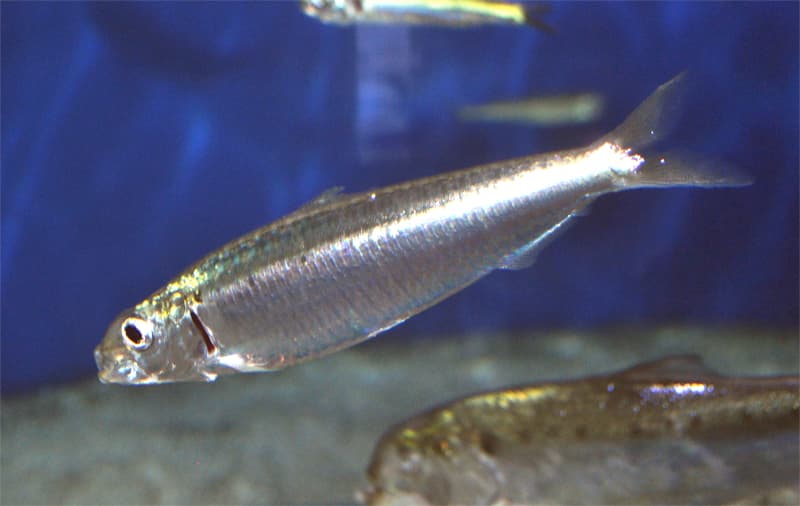
Sardine
Image: This illustration was made by Citron You must credit this : Citron / CC-BY-SA-3.0 (CC BY-SA 3.0)
NameSardine
Scientific NameSardina pilchardus
Common NamesEuropean Pilchard, Sardine, Pilchard
FamilyClupeidae
OriginEastern Atlantic Ocean, Mediterranean Sea, Black Sea
Temperamentpeaceful
Dietomnivore
Care Levelexpert
Minimum Tank Size (Gallons)1000
Max Size (Inches)12
Water TypeSaltwater
Temperature Range (°F)50-75
pH Range8.0-8.4
Compatible SpeciesOther temperate schooling fish, Non-aggressive bottom dwellers
Description
The Sardine, or European Pilchard, is a small, silvery schooling marine fish found in temperate waters. They are filter feeders, primarily consuming plankton, and are of significant commercial importance globally. Due to their schooling nature, large adult size, and specific temperate marine requirements, they are considered an expert-level species requiring immense, specialized aquariums.