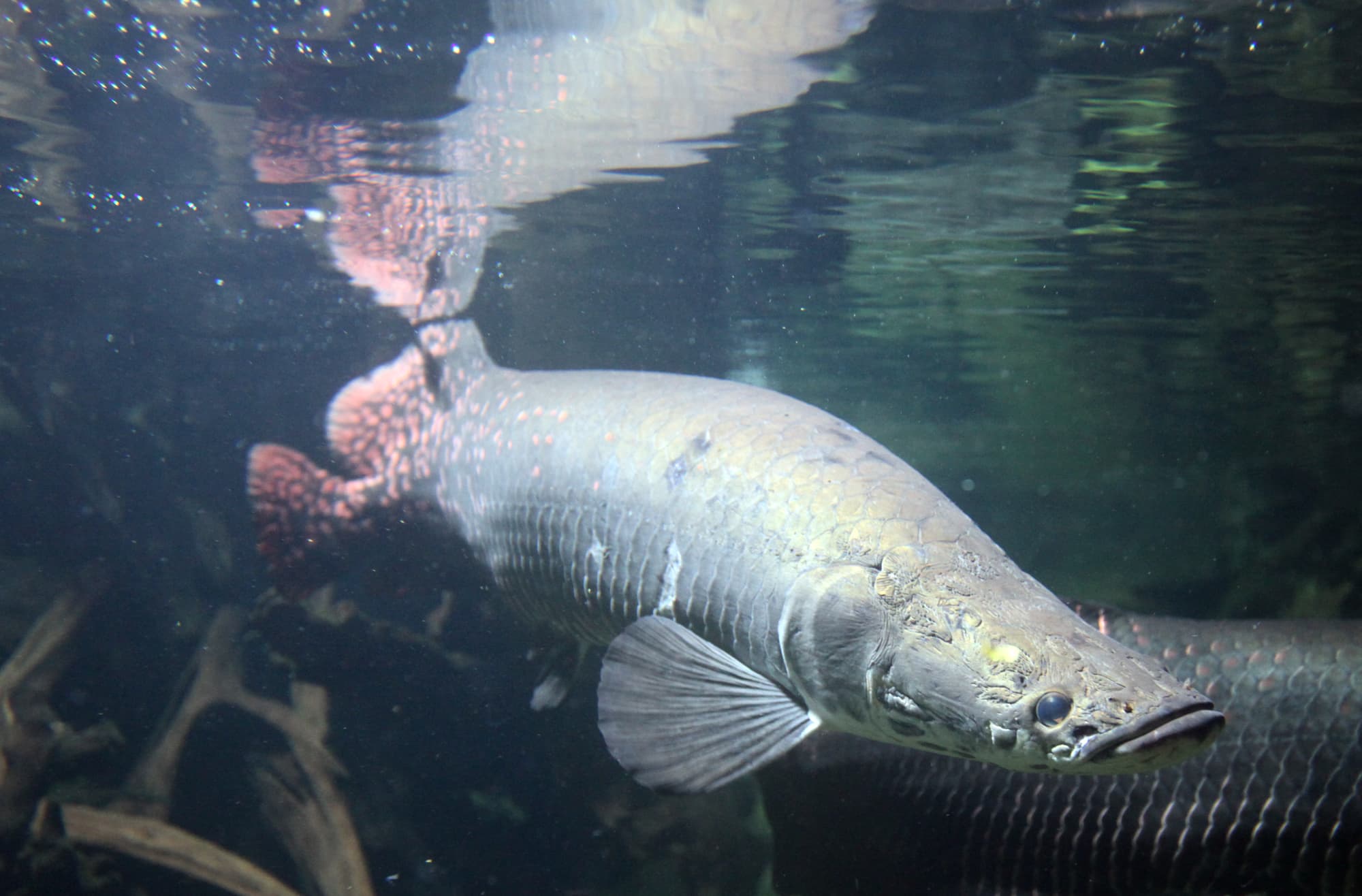
Arapaima
Image: This illustration was made by Citron You must credit this : Citron / CC-BY-SA-3.0 (CC BY-SA 3.0)
NameArapaima
Scientific NameArapaima gigas
Common NamesArapaima, Pirarucu, Paiche
FamilyArapaimidae
OriginSouth America, Amazon Basin, Essequibo Basin
Temperamentaggressive
Dietcarnivore
Care Levelexpert
Minimum Tank Size (Gallons)5000
Max Size (Inches)120
Water TypeFreshwater
Temperature Range (°F)75-82
pH Range6.0-7.5
Compatible SpeciesLarge Catfish (e.g., Redtail Catfish), Large Arowana, Large Pacu, Other very large, robust South American Cichlids
Description
The Arapaima is one of the largest freshwater fish in the world, known for its massive size and unique ability to breathe air. Native to the Amazon and Essequibo basins, it possesses distinctive large, armored scales and a powerful, elongated body. This apex predator requires immense aquariums and specialized care, making it suitable only for expert aquarists or public displays.